As we delve into the realm of air conditioning technology in 2025, the comparison between Window and Split ACs unveils a fascinating narrative. From their historical evolution to the latest advancements, this exploration promises to provide valuable insights for consumers seeking the ideal cooling solution.
The subsequent paragraphs will shed light on the key differences in design, installation, technology, efficiency, maintenance, performance, and cost between these two popular AC variants.
Introduction to Window and Split ACs
Window air conditioners have been around since the 1930s, becoming popular for their ease of installation and affordability. On the other hand, split air conditioners emerged in the 1970s, offering a more aesthetically pleasing option with quieter operation.
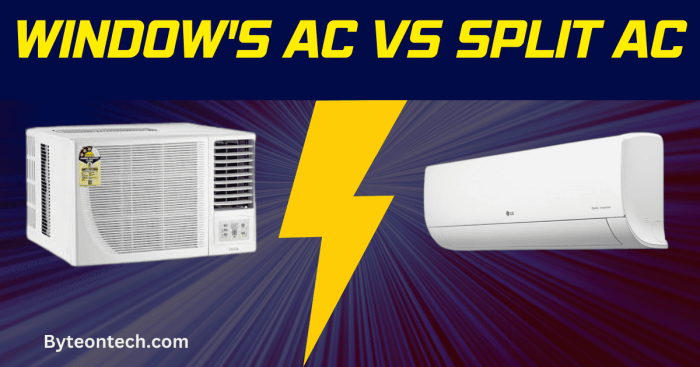
One of the main differences between window and split ACs lies in their design and installation. Window AC units are self-contained systems that are mounted on a window or wall, while split ACs consist of two units - the indoor unit and the outdoor unit, connected by refrigerant lines.
Split ACs provide more flexibility in terms of placement and are often preferred for larger spaces.
Popularity and Market Trends in 2025
As of 2025, split ACs have gained significant popularity due to their energy efficiency and sleek design. They are commonly found in residential and commercial spaces where aesthetics play a role in the decision-making process. Window ACs, on the other hand, are still widely used in smaller rooms or spaces where a more budget-friendly option is needed.
Technology Advancements in Window and Split ACs
In recent years, both window and split AC units have seen significant technological advancements aimed at improving efficiency and user experience. Let's explore the latest features and innovations in both types of AC units.
Latest Technological Features in Window ACs in 2025
Window AC units in 2025 have seen a surge in technological advancements to enhance performance and user convenience. Some of the latest features include:
- Smart Connectivity: Many modern window ACs come equipped with Wi-Fi connectivity, allowing users to control the unit remotely via a smartphone app.
- Energy Efficiency: Advanced sensors and inverter technology help optimize energy consumption, resulting in lower electricity bills.
- Quiet Operation: Improved compressor technology and sound-dampening features ensure quieter operation, minimizing disruption.
Energy Efficiency Ratings of Modern Window and Split ACs
When comparing the energy efficiency ratings of modern window and split ACs, split ACs generally have a slight edge due to their advanced technology. Inverter technology, which is commonly found in split ACs, allows the compressor to adjust its speed based on the cooling requirements, resulting in significant energy savings.
However, modern window ACs have also made strides in improving energy efficiency, making them a viable option for those looking to reduce energy consumption.
Impact of Smart Technology Integration in Split ACs Compared to Window ACs
The integration of smart technology in split ACs has revolutionized the way we interact with these cooling units. Smart features such as voice control, adaptive cooling based on occupancy detection, and energy usage monitoring provide users with a higher level of convenience and control.
In contrast, while some window AC models also offer smart connectivity, the range of features is typically more limited compared to split ACs. The impact of smart technology integration is more pronounced in split ACs, offering users a more personalized and efficient cooling experience.
Installation and Maintenance
When it comes to installing and maintaining air conditioning units, both window and split ACs require proper attention to ensure optimal performance and longevity. Let's explore the differences between the installation and maintenance processes of these two types of AC units.
Installation Process
Installing a window AC unit is relatively straightforward compared to a split AC. Window ACs are designed to fit in a window or a pre-made wall slot, making the installation process simpler and quicker. On the other hand, split ACs require professional installation as they consist of two unitsthe indoor unit and the outdoor unit.
This can be more complex and may require additional tools and expertise.
Maintenance and Servicing Tips
- Regularly clean or replace the air filters in both window and split AC units to ensure proper airflow and efficiency.
- Keep the coils and fins clean to prevent dust and debris from affecting the unit's performance.
- Check for any leaks, unusual sounds, or odors and address them promptly to avoid potential issues.
- Schedule annual maintenance with a professional technician to inspect and service the AC unit for optimal performance.
Comparison of Ease of Installation and Maintenance
- Window ACs are generally easier to install due to their all-in-one design, making them a convenient option for smaller spaces or single rooms.
- Split ACs, although more complicated to install, offer flexibility in placement with the separate indoor and outdoor units.
- In terms of maintenance, both window and split ACs require regular upkeep to ensure efficient operation, but split ACs may have slightly higher maintenance costs due to their dual-unit design.
Cooling Efficiency and Performance

In this section, we will delve into the cooling capacity, efficiency, and performance of both window and split AC units.
Cooling Capacity of Window ACs in Different Room Sizes
Window ACs typically come in various cooling capacities measured in British Thermal Units (BTUs) per hour. The cooling capacity needed for a room depends on its size. For example, a small room of about 150 to 300 square feet may require a window AC unit with a cooling capacity of 5,000 to 7,000 BTUs.
On the other hand, a larger room of 350 to 550 square feet might need a unit with a capacity of 12,000 to 18,000 BTUs. It's essential to match the cooling capacity of the AC unit to the size of the room for optimal performance and efficiency.
Cooling Efficiency of Split ACs Compared to Window ACs
Split ACs are known for their higher energy efficiency compared to window ACs. This is due to the separation of the condenser and evaporator units in split ACs, which allows for better heat transfer and overall cooling efficiency. Split ACs also often come with inverter technology, which adjusts the compressor speed based on the cooling needs, resulting in energy savings.
While window ACs can be efficient in smaller spaces, split ACs generally offer better cooling efficiency, making them a popular choice for larger rooms or spaces.
Noise Levels and Air Distribution
In terms of noise levels, split ACs tend to be quieter than window ACs. The reason for this is that the condenser unit in split ACs is located outside the room, reducing noise levels indoors. Additionally, split ACs usually have multiple air handlers or indoor units, allowing for better air distribution throughout the room.
This can result in more uniform cooling and better comfort for occupants compared to a single window AC unit.
Cost Comparison
When it comes to comparing the costs of window and split AC units, there are several factors to consider. Let's break down the initial and long-term operational costs to determine the cost-effectiveness of each option.
Initial Cost Differences
Window AC units are generally more affordable upfront compared to split ACs. The cost of purchasing and installing a window AC is usually lower due to its simpler design and installation process. On the other hand, split ACs tend to be more expensive in terms of initial investment, as they require professional installation and additional components like the indoor and outdoor units.
Long-Term Operational Costs
When it comes to long-term operational costs, split ACs are often more energy-efficient than window units. Split ACs have higher energy efficiency ratings, resulting in lower electricity consumption over time. Additionally, split ACs may have lower maintenance costs as they are less prone to breakdowns compared to window units.
Return on Investment
Despite the higher initial cost of split ACs, their energy efficiency and lower maintenance requirements can lead to significant savings in the long run. While window ACs may be more affordable upfront, they could end up costing more in terms of electricity bills and repairs over time.
Therefore, considering the return on investment, split ACs may prove to be more cost-effective in the long term.
Conclusive Thoughts
In conclusion, the comparison between Window and Split ACs in 2025 highlights the dynamic landscape of cooling technology. Whether it's about cooling efficiency, cost-effectiveness, or technological innovations, this discussion aims to empower consumers in making informed decisions for their cooling needs.
FAQ Corner
What are the key differences in design between Window and Split ACs?
The main difference lies in the installation, where window ACs are typically installed in a window opening while split ACs have separate indoor and outdoor units.
Which AC type is more energy-efficient, Window or Split?
Split ACs are generally more energy-efficient than window ACs due to their advanced technology and design.
What is the average lifespan of Window and Split AC units?
Window ACs typically last around 10-15 years, while Split ACs can last up to 15-20 years with proper maintenance.



![How To Avoid Contractor Scams [Infographic]](https://airconditioner.infotangerang.id/wp-content/uploads/2025/10/how-to-avoid-contractor-scams-feat-120x86.png)