When it comes to selecting the perfect BTU rating for your air conditioner, making the right choice is essential for optimal cooling and energy efficiency. This guide dives deep into the factors to consider, how to calculate your BTU needs, and the consequences of choosing an oversized or undersized unit.
Follow along to ensure you make the best decision for your space.
Understanding BTU Rating
BTU (British Thermal Unit) rating is a measurement used to determine the cooling capacity of an air conditioner. It indicates how much heat the unit can remove from a room per hour.
How BTU Rating Affects Cooling Capacity
The higher the BTU rating, the more powerful the air conditioner is in terms of cooling. For example, an air conditioner with a higher BTU rating can cool larger rooms or spaces more efficiently compared to one with a lower BTU rating.
Choosing the Right BTU Rating for Energy Efficiency
It is crucial to select the appropriate BTU rating for your air conditioner to ensure energy efficiency. If you choose an air conditioner with a BTU rating that is too low for the size of the room, the unit will have to work harder to cool the space, leading to higher energy consumption and increased utility costs.
On the other hand, selecting an air conditioner with a BTU rating that is too high for the room size can result in inefficient cooling and wasted energy.
Factors to Consider
When selecting the right BTU rating for your air conditioner, there are several important factors to take into account to ensure optimal performance and efficiency.
Square Footage of the Room
The square footage of the room is a crucial factor in determining the appropriate BTU rating for your air conditioner. As a general rule of thumb, the larger the room, the higher the BTU rating needed to effectively cool the space.
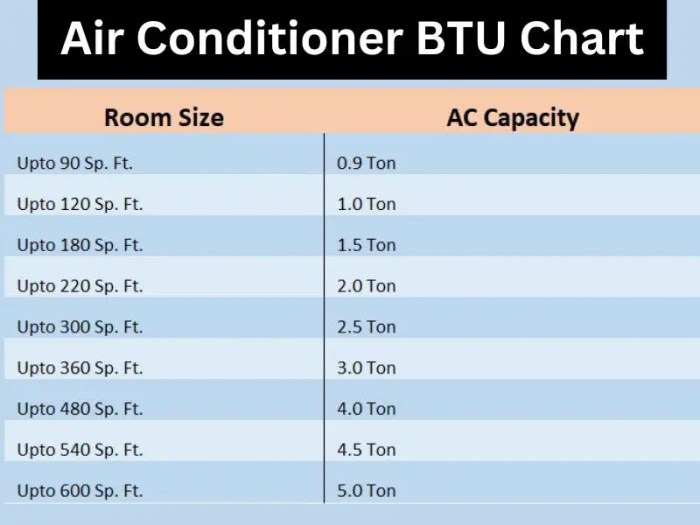
Here is a basic guideline for BTU ratings based on room size:
• 150 to 350 square feet: 5,000 to 8,000 BTUs• 350 to 550 square feet: 8,000 to 12,000 BTUs• 550 to 1,050 square feet: 12,000 to 18,500 BTUs• 1,050 to 1,600 square feet: 18,500 to 25,000 BTUs
Climate Conditions of the Area
The climate conditions of the area where the air conditioner will be used play a significant role in determining the appropriate BTU rating. Hotter climates require air conditioners with higher BTU ratings to effectively cool the space. Conversely, cooler climates may require lower BTU ratings for efficient cooling.
Ceiling Height, Insulation, and Windows
Factors such as ceiling height, insulation quality, and the number of windows in the room can also impact the BTU rating needed for your air conditioner. Rooms with high ceilings, poor insulation, or numerous windows may require a higher BTU rating to compensate for heat loss or gain.
It is essential to consider these factors when determining the appropriate BTU rating for your specific space.
Calculating BTU Needs
Determining the appropriate BTU rating for your air conditioner is essential to ensure optimal cooling efficiency in your space. By calculating the BTU needs based on room size and adjusting for various factors, you can select the right air conditioner for your specific requirements.
Calculating BTU Needs
When calculating the BTU needs for a room, a general rule of thumb is to multiply the room's square footage by 20 BTUs. This formula provides a basic estimate of the required cooling capacity. However, it is important to consider additional factors that can affect the BTU rating needed for your space.
- A room with increased sunlight exposure may require an additional 10% to 20% more BTUs to compensate for the heat gain from the sun.
- If there are more than 2 occupants regularly in the room, add 600 BTUs for each additional person to the calculated BTU rating.
- For kitchens, add 4,000 BTUs to the calculated rating due to the heat generated by cooking appliances.
Recommended BTU Ratings for Common Room Sizes
| Room Size (sq. ft.) | Recommended BTU Rating |
|---|---|
| 100-150 | 5,000-6,000 BTU |
| 150-250 | 6,000-7,000 BTU |
| 250-300 | 7,000-8,000 BTU |
| 300-350 | 8,000-9,000 BTU |
| 350-400 | 9,000-10,000 BTU |
Oversized vs. Undersized Units
When it comes to choosing the right air conditioner for your space, getting the BTU rating just right is crucial. Let's delve into the consequences of opting for an oversized or undersized unit.Excessive BTU Rating (Oversized Unit):
Consequences of an Oversized Unit
Opting for an air conditioner with a BTU rating that is too high for your space can lead to various issues. An oversized unit will cool the room rapidly, causing it to cycle on and off frequently. This constant cycling not only results in uneven cooling but also increases energy consumption and wear and tear on the system.
In the long run, this can lead to higher utility bills and a shorter lifespan for your air conditioner.
Insufficient BTU Rating (Undersized Unit):
Drawbacks of an Undersized Unit
Conversely, selecting an air conditioner with a BTU rating that is too low for your space will struggle to cool effectively. An undersized unit will run continuously in an attempt to reach the desired temperature, leading to high energy usage without achieving the desired comfort level.
This can result in discomfort for occupants, reduced air quality, and potential humidity issues.
Efficiency and Effectiveness:
Properly Sized vs. Incorrectly Sized Units
Choosing an air conditioner with the appropriate BTU rating ensures optimal efficiency and effectiveness. A properly sized unit will cool the space efficiently, maintaining a consistent temperature without excessive cycling. This not only enhances comfort but also reduces energy consumption and prolongs the lifespan of the air conditioner.
On the other hand, incorrectly sized units, whether oversized or undersized, can lead to discomfort, inefficiency, and increased operating costs.
Final Wrap-Up
In conclusion, understanding the importance of selecting the correct BTU rating for your air conditioner is key to enjoying a comfortable and cost-effective cooling experience. By considering all the factors discussed in this guide, you can make an informed decision that will keep you cool and save energy.
FAQ Corner
How does BTU rating affect cooling capacity?
The BTU rating determines the cooling capacity of an air conditioner, with higher BTU ratings providing more cooling power for larger spaces.
What factors should be considered when choosing the right BTU rating?
Factors like room size, climate conditions, ceiling height, insulation, and windows play a crucial role in determining the appropriate BTU rating.
Can an air conditioner with a BTU rating that is too high be problematic?
An oversized unit may cool the room too quickly, leading to increased humidity levels and inefficient operation.
How can I calculate the BTU needs for my room?
Use a formula based on the room size, adjusting for factors like sunlight exposure and the number of occupants to determine the right BTU rating.



![How To Avoid Contractor Scams [Infographic]](https://airconditioner.infotangerang.id/wp-content/uploads/2025/10/how-to-avoid-contractor-scams-feat-120x86.png)